The two-Terry paradox
The Outsider (Stephen King Edition)The two-Terry paradox is the central contradiction in the case against Terry Maitland: evidence appears to place him in Flint City committing Frank Peterson’s murder and, at the same time, in Cap City attending a lecture. The Cap City footage is not a vague resemblance or a single uncertain glimpse. Ralph Anderson watches Maitland in the audience and then sees him rise to ask a question on camera. The paradox unsettles the investigation, but it does not immediately free Ralph from his certainty that Maitland was guilty. Instead, the incompatible evidence becomes a test of how far conviction can survive facts that it cannot explain.
The arrest and the cost of certainty
Before the arrest, Ralph knows there are gaps in the investigation and that Maitland will claim an alibi. He would prefer to investigate further and find the weaknesses in that account before acting. But he believes the evidence already identifies the right man, and fears that delay could leave a dangerous person free to harm another child. With Flint City’s detective staff reduced to three full-time officers, Jack Hoskins away and Betsy Riggins assisting the State Police, the department is stretched thin; the personal nature of the case makes Ralph’s participation feel especially fraught. He knows he should not be part of the arrest, yet proceeds.
The immediate rationale is the danger of waiting. Ralph and the district attorney, Bill Samuels, consider the possibility that Maitland could kill again, including a child among the young people he encounters as a coach. That fear carries more weight than the incomplete background investigation or the anticipated alibi. Ralph already blames himself for not recognizing anything in Maitland earlier, although he also understands that no one could have looked at a man at an ordinary Little League gathering and known what he might be contemplating. The paradox later exposes the price of this early decision: the case was treated as settled before the alibi had been checked.
Cap City appears on the record
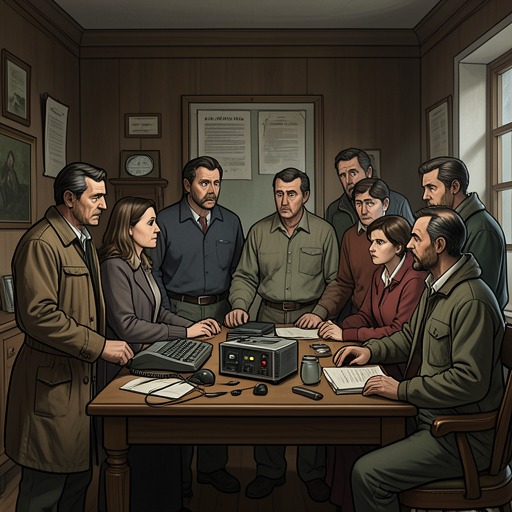
The contradiction becomes concrete when Ralph reviews the Channel 81 recording of Harlan Coben’s lecture. The audience shots show a man who looks like Maitland among three men and a woman; Ralph identifies the others as Roundhill, Quade, and Grant. At first, the group image leaves room to doubt what he is seeing. Then the recording moves to the question-and-answer session. Maitland rises, appears in close-up, and asks Coben a question. Ralph pauses the video, names him, and recognizes that this is not simply a distant figure who could be mistaken for someone else.
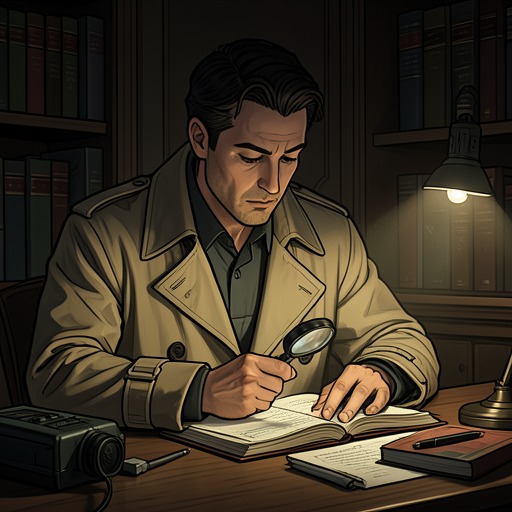
The timing makes the image especially difficult to dismiss. Coben’s lecture lasts about forty minutes, followed by questions; the question-and-answer segment is recorded around the fifty-six-minute mark. Ralph watches Maitland stand to speak and then looks at the image for twenty seconds. A separate review of the Cap City Sheraton’s color security footage seems to reinforce the recording: a man resembling Maitland appears in the lobby, gift shop, fitness room, and autograph line. The hotel footage is less conclusive in some locations, but Ralph considers the exercise-room and autograph-line images persuasive. The lecture, however, is the strongest piece: Maitland is unmistakably visible asking a question.
Ralph’s wife, Jeannie Anderson, has argued that the Cap City evidence could supply the missing piece: if Maitland was in Flint City, then a double must have been in Cap City. Yet the recording offers the reverse problem just as forcefully. The man in Cap City appears to be the same Terry whose fingerprints and other evidence connect him to Flint City. Ralph says that none of it makes sense. The paradox is not merely that two witnesses disagree; two substantial bodies of evidence seem to place the same person in different places at once.
An alibi recast as a possible trick
The footage does not end Ralph’s doubts about the alibi; it changes their shape. He wonders whether Maitland’s appearance at the lecture could be a setup, noting that Maitland stood to ask his question as if he knew a camera would capture him. The thought is difficult to sustain, but its very possibility allows Ralph to treat the strongest exculpatory image as a potential act of deception. Even after the lecture recording has made the hotel footage almost beside the point, he can still imagine an elaborate trick rather than accept that his understanding of the case has failed.
When Jeannie asks him to set aside all the evidence on both sides and answer honestly whether he thinks Maitland killed the boy, Ralph lists the details that trouble him. One man associated with the case had called Willow Rainwater “ma’am” rather than using her name; the driver of the white van behind Shorty’s Pub had asked for directions to a nearby clinic, though Maitland had lived in Flint City all his life. Teachers would place Maitland in Cap City at the time of both the abduction and the murder. The question at Coben’s lecture, and the fact that Maitland stood to make himself visible, seem almost too convenient. Ralph also recalls the fingerprints on the book. Rather than resolve these clues into a single explanation, he admits that he does not know whether Maitland killed the boy.
That uncertainty competes with evidence Ralph regards as stronger. He reflects that the DNA from Flint City is solid evidence, while there is no DNA from Cap City. The fingerprints on the book could have been planted, although doing so would not be as simple as television crime programs make it seem. Three teachers who had known Maitland for years still provide an alibi, but Ralph urges himself to set their testimony aside and trust the forensic evidence. He describes his earlier failure to investigate Maitland’s movements as more than an error: he feels he has gone blind. In this way, the paradox does not instantly overturn his judgment. It reveals how the judgment protects itself, absorbing contrary evidence as either a planted clue or a deliberate performance.
Natural explanations and the supernatural possibility
Jeannie presses the contradiction beyond the language of metaphor. Stories of footprints that stop and maggots appearing inside a cantaloupe can stand for the inexplicable, she argues, but the two Terrys present a question that cannot be settled merely by calling it symbolic. She asks whether the only answer to the riddle might be supernatural. Ralph refuses that conclusion. He does not believe in ghosts or other violations of the natural world, and insists that a real person killed Frank Peterson. Because Maitland is dead, the conclusion available to him is that Maitland was the killer, however difficult the conflicting evidence remains.
The exchange sharpens the paradox into a choice between explanations that Ralph cannot comfortably accept. He recalls the Sherlock Holmes maxim that once the impossible is eliminated, whatever remains, however improbable, must be true, but rejects the proposed amendment that eliminating natural explanations leaves the supernatural. His reasoning stays attached to the limits of ordinary investigation: a culprit must have been a person, and DNA is powerful evidence. Yet those rules do not explain how the Cap City recording and Flint City evidence can both be true. The more firmly Ralph insists on a natural answer, the more visibly the unresolved contradiction bears down on his certainty.
The paradox after Maitland’s death
Maitland’s death does not close the question. Ralph imagines him as already entombed by the DNA evidence, while the conflicting testimony and Cap City material continue to trouble the official account. The case has become irreversible in a way the investigation was not: the person whose movements might have been tested is dead, and Ralph must live with the possibility that his confidence helped bring about an outcome that later evidence cannot make coherent.
The phrase Ralph eventually mutters to himself is the simplest statement of the impossibility: “And a man can’t be two places at the same time.” It is not a solution, but a limit he can state even when he cannot explain the evidence. The paradox therefore names both the case’s factual contradiction and Ralph’s crisis of judgment. A recorded public appearance, a cluster of eyewitnesses, fingerprints, and forensic evidence press in different directions; none can simply be erased without consequence. The unresolved tension is what makes the two-Terry problem more than an unusual alibi: it forces the investigation to confront the distance between believing the evidence and understanding what the evidence means.